Enterprise Platform Architecture
Enterprise Certificate Verification Platform
PROJECT CONTEXT
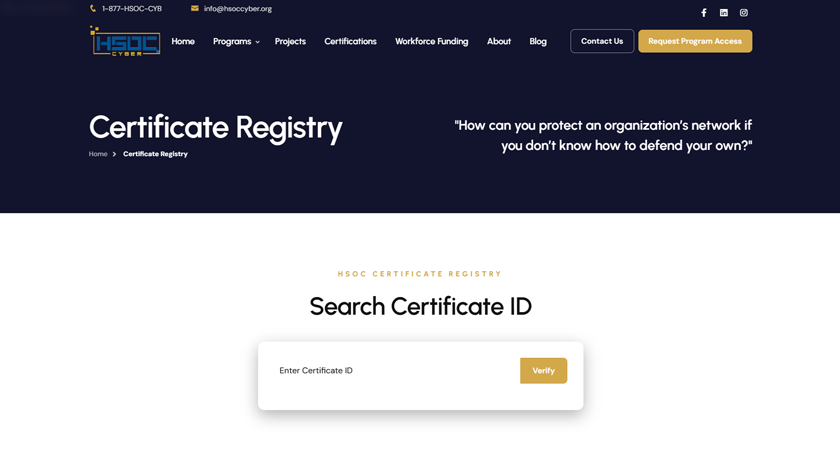
Digital Credential Verification
SCOPE:
PHP, MySQL, REST APIs, Webhooks, Validation
ENGAGEMENT MODEL
Full-stack architecture and backend validation
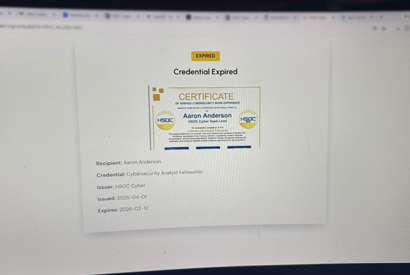
Platform scope: this case study documents the full enterprise credential verification system, including the backend, database, API layer, and secure verification flow used to validate issued certifications.
Case Study Overview
Designed and developed a full-stack enterprise credential verification platform enabling real-time validation of issued certifications through secure verification links. The backend was architected with PHP, MySQL, and REST APIs, with dynamic record lookups, automated validation responses, webhook processing, and server-side access checks to support enterprise-level credential management.
Key Factors
- Secure verification links that load certificate details in real time.
- PHP backend logic with dynamic database queries and server-side validation.
- MySQL schema design for issued credentials, status tracking, and validation logs.
- REST API endpoints for record retrieval, verification responses, and platform integration.
- Webhook processing to support automated certificate updates and external system communication.
Debugging and Resolution Process
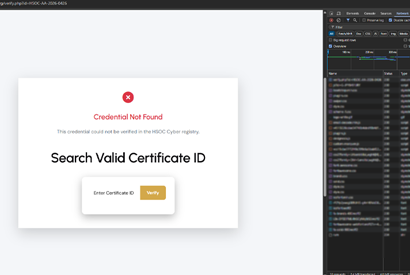
During testing, the SQL query was not flowing into the PHP callout function, which meant the HTML layer had no returned data to render. I isolated the failure by tracing the request path from the frontend to the PHP handler and confirmed that the query logic was not targeting the exact row set needed for the verification output. The issue was compounded by a NOT EXISTS condition that was filtering out valid records before they reached the display layer.
- Reworked the SQL statement so the PHP callout function received a valid result set instead of an empty response.
- Replaced the failing NOT EXISTS logic with a direct WHERE clause keyed on the primary key so the query pulled the correct IDs from the database.
- Verified that the PHP handler could now pass certificate records back to the HTML template for rendering.
- Confirmed the output path end-to-end so the verification page displayed data reliably instead of failing silently.
- Separated query logic from presentation logic so future debugging could focus on either the database layer or the display layer independently.
Lessons Learned and Efficiency Gains
- Resolved: the query-to-rendering failure that kept the verification page from displaying any certificate data.
- Improved efficiency by simplifying the SQL path and eliminating unnecessary negative filtering from the query logic.
- Streamlined the workflow by using primary-key lookups and a direct WHERE clause, which made record retrieval faster and easier to debug.
- Learned that the cleanest verification systems depend on predictable query results and a clear handoff between SQL, PHP, and HTML.
- Gained a more reliable pattern for building database-backed verification tools with better error visibility and less logic fragmentation.
Platform Implementation Breakdown
Secure Server-Side Validation
Enterprise Credential Management